

Introduction
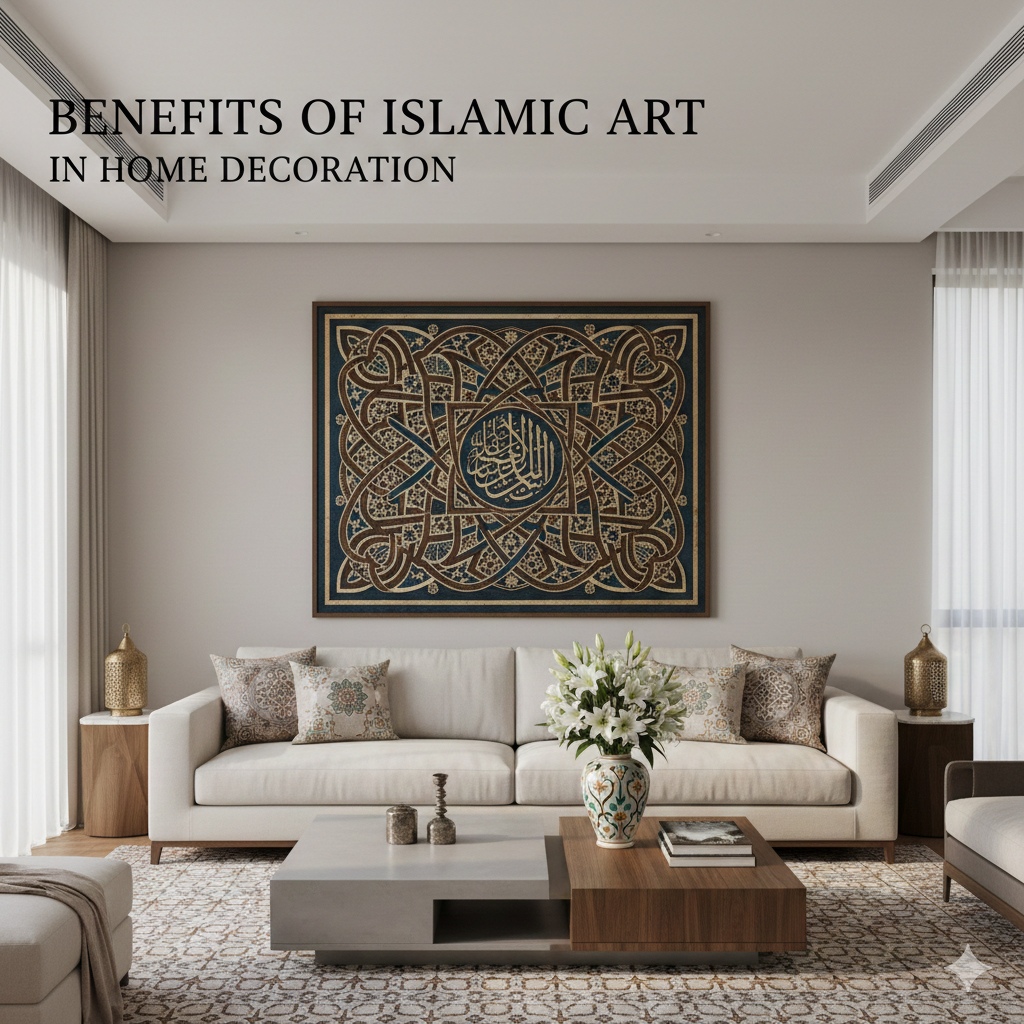
Home decoration is more than just arranging furniture or choosing paint colors. It reflects personal taste, cultural values, and spiritual beliefs. Islamic art has been used for centuries to beautify homes, mosques, and public spaces. Today, it is becoming increasingly popular in modern interior design due to its elegance, meaning, and timeless beauty. Islamic art combines spirituality with aesthetics, making it a powerful element in home decoration. This article explores the key benefits of using Islamic art in home interiors and why it is a meaningful choice for homeowners.
1. Enhances Spiritual Atmosphere
One of the greatest benefits of Islamic art in home decoration is its ability to create a spiritual and peaceful environment. Islamic calligraphy often includes verses from the Quran, names of Allah, or sayings of the Prophet Muhammad (PBUH). Displaying these elements in your home serves as a constant reminder of faith and helps strengthen your spiritual connection.
How it helps:
- Encourages remembrance of Allah
- Creates a calm and positive atmosphere
- Promotes mindfulness and inner peace
Many families place Islamic art in living rooms or prayer areas to maintain a spiritually uplifting environment.
2. Adds Timeless Beauty and Elegance
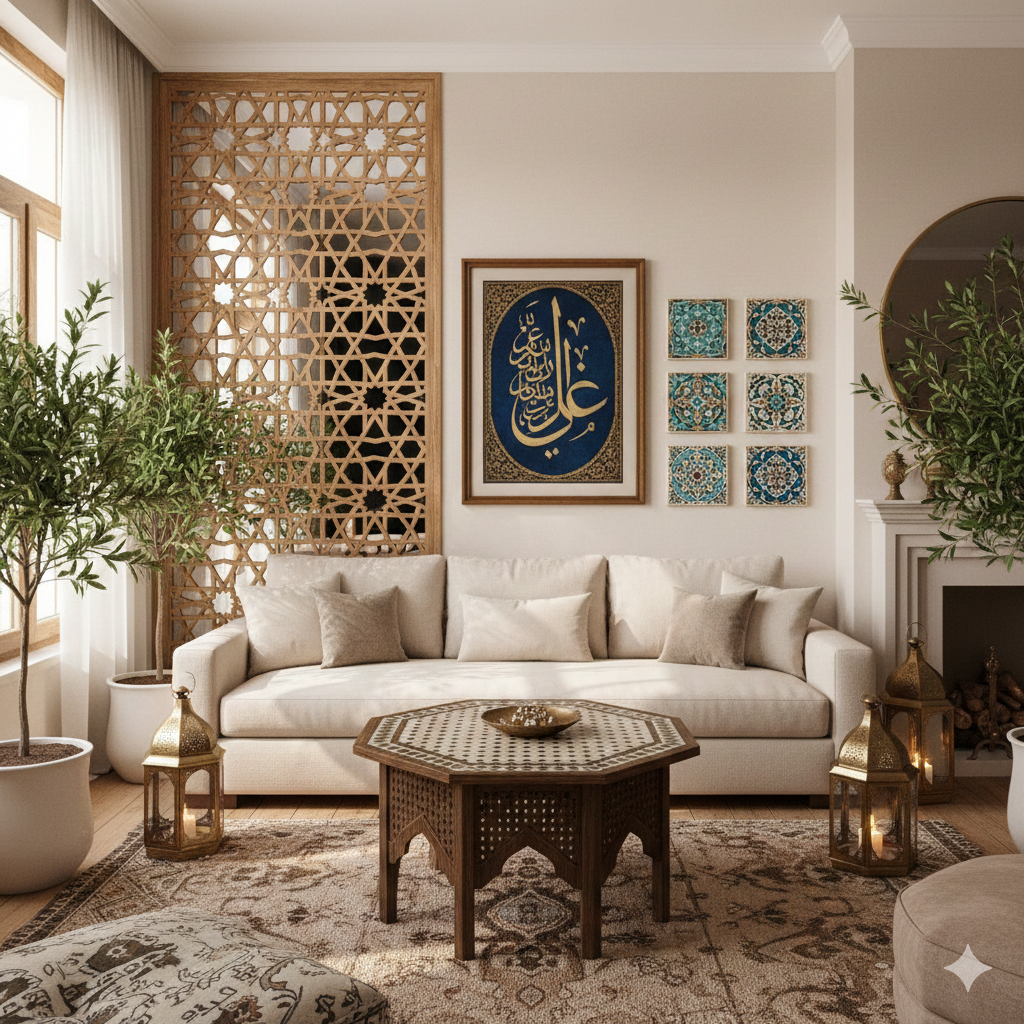
Islamic art is known for its detailed patterns, geometric designs, and balanced compositions. These elements never go out of style. Whether your home has a traditional or modern interior, Islamic art blends seamlessly and adds a touch of elegance.
Popular Islamic art elements:
- Geometric patterns
- Arabesque designs
- Floral motifs
- Calligraphy artwork
These designs enhance the visual appeal of walls, ceilings, tiles, and decorative items.
3. Promotes Peace and Harmony
Islamic art avoids the depiction of living beings, focusing instead on abstract and symbolic forms. This approach creates a sense of order, balance, and harmony. The repetition of patterns and symmetry helps reduce visual noise and makes the space feel organized and calm.
Benefits for home ambiance:
- Reduces stress
- Creates visual balance
- Supports mental relaxation
This is especially beneficial in bedrooms, study rooms, and prayer spaces.
4. Reflects Cultural Identity
Using Islamic art in home decoration allows homeowners to express their cultural and religious identity proudly. It connects the present generation with Islamic heritage and traditions passed down over centuries.
Cultural benefits:
- Preserves Islamic history
- Shows respect for heritage
- Creates a sense of belonging
For Muslim families, Islamic art becomes a way to pass values and culture to children subtly and beautifully.
5. Versatile for All Interior Styles
One major advantage of Islamic art is its versatility. It can be adapted to different interior design styles, from classic to contemporary.
Where Islamic art can be used:
- Wall frames and canvas art
- Wooden or metal calligraphy pieces
- Tiles and wallpapers
- Carpets and cushions
Minimal calligraphy pieces work well in modern homes, while detailed patterns suit traditional interiors.
6. Creates a Positive First Impression
The living room is often the first space guests see. Islamic art, placed thoughtfully, can leave a strong and positive impression. It reflects sophistication, spirituality, and thoughtful design.
Guest perception:
- Shows elegance and refinement
- Communicates values without words
- Makes the space feel welcoming
Well-chosen artwork can become a conversation starter and leave lasting impressions.
7. Encourages Mindful Living
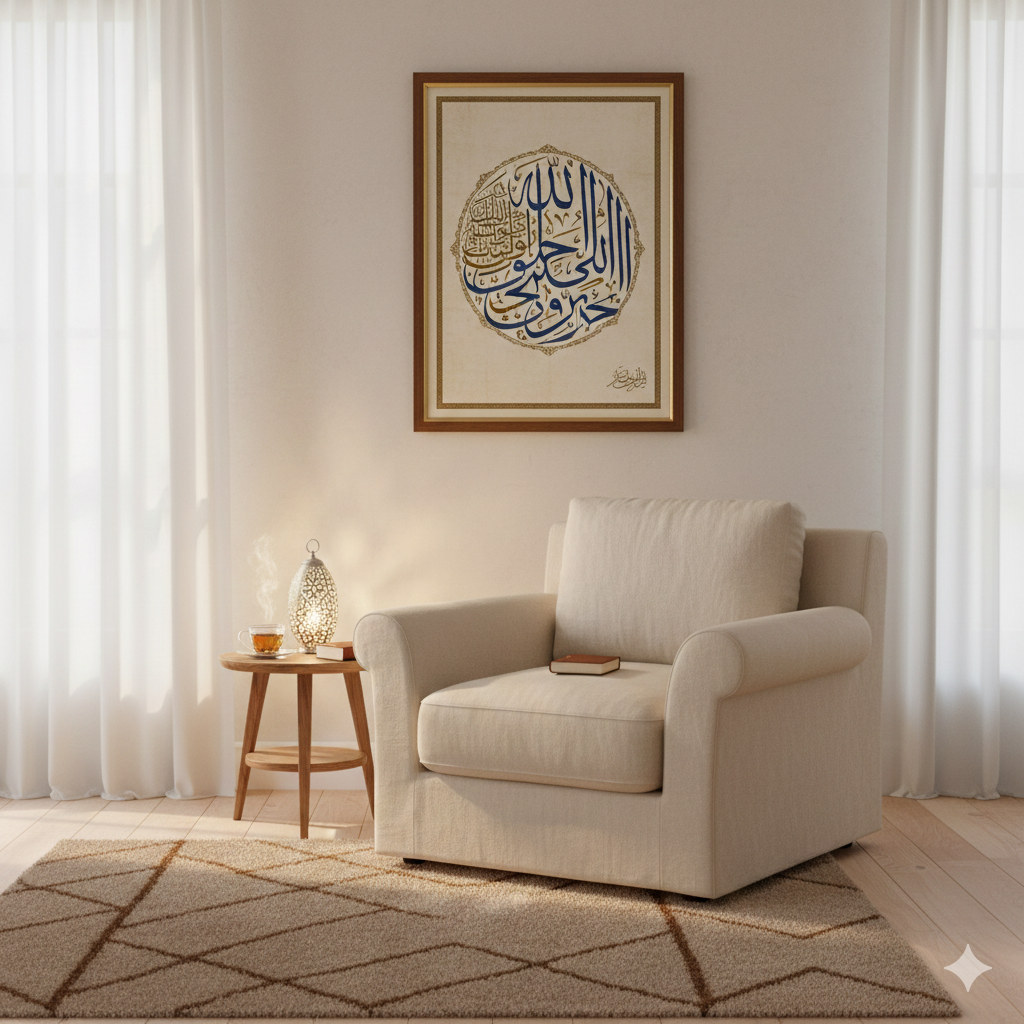
Islamic art often carries deep meanings and messages. When placed in daily living spaces, it encourages reflection and mindfulness. Quranic verses and meaningful words remind residents to practice patience, gratitude, and kindness.
Daily impact:
- Improves emotional well-being
- Encourages positive behavior
- Supports spiritual growth
This makes Islamic art not just decoration, but a meaningful lifestyle choice.
8. Long-Lasting and Valuable Investment
High-quality Islamic art pieces are durable and long-lasting. Many handmade or calligraphy artworks increase in value over time, especially when created by skilled artists.
Investment benefits:
- Durable materials
- Artistic and cultural value
- Emotional and spiritual worth
Unlike trendy décor items, Islamic art remains relevant and meaningful for generations.
9. Easy to Maintain and Customize
Islamic art is available in various forms, sizes, and materials. Homeowners can easily customize artwork according to space, color scheme, and personal preference.
Customization options:
- Personalized calligraphy
- Custom color themes
- Choice of materials like wood, metal, or canvas
This flexibility makes it easy to match any home design without much effort.
Conclusion
Islamic art in home decoration offers more than visual beauty. It creates a peaceful spiritual environment, reflects cultural identity, and adds timeless elegance to any space. Its versatility, meaningful designs, and calming influence make it an ideal choice for modern homes. By incorporating Islamic art, homeowners can transform their living spaces into places of beauty, faith, and harmony.
FAQs
1. What types of Islamic art are best for home decoration?
Calligraphy art, geometric patterns, and arabesque designs are most suitable for home interiors.
2. Can Islamic art be used in modern home designs?
Yes, minimalist calligraphy and subtle patterns blend perfectly with modern interiors.
3. Where should Islamic art be placed in the home?
Common areas include living rooms, prayer rooms, hallways, and bedrooms.
4. Is Islamic art only for Muslim homes?
No, Islamic art is appreciated worldwide for its beauty and artistic value, regardless of religion.
5. How do I choose the right Islamic art for my home?
Consider your space, color scheme, personal preference, and the message you want the artwork to convey.